 Brancepeth Castle
Wednesday 22 November 1978
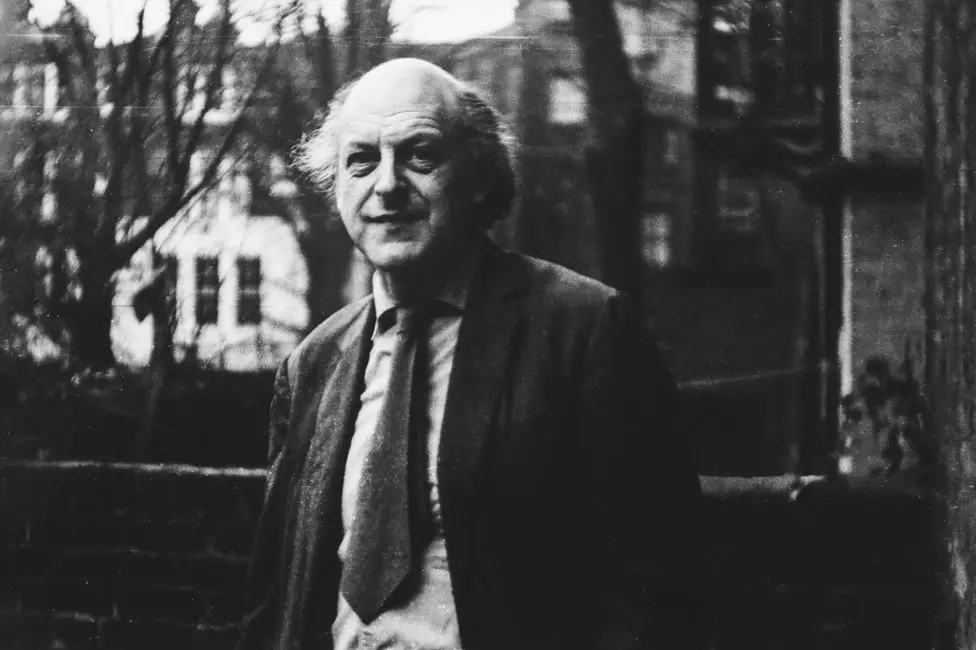
Dennis Dobson was the publisher behind the eponymous Dobson Books. He sadly died in 1978 shortly before the family moved to the castle.
Memorial Service Address
Dr Mervyn Stockwood, Bishop of Southwark gave the following address at his memorial service.
"Since Dennis died and I have reflected on my long association with him, a Latin proverb has gone through my mind – Omne rarum carum – all that is rare is dear. And the word ‘rare’ could have many attributes – unusual, eccentric, even charmingly dotty.
"I first met Dennis in 1931, forty seven years ago. I was a young prep school master in Shrewsbury, trying to earn a few pounds before going up to Cambridge, and Dennis was a new boy. His parents had bought a house near the school and Dennis arrived, well wrapped up with much disinfectant, in a chauffeur-driven car. The hours he kept in the ensuing years were determined by his mother rather than by the headmaster. There were many exemptions and leaves of absence, especially for concerts and anything to do with music. And when Friday came he left at mid-day for the holiday home at Llandudno, returning at leisure and invariably late on Monday morning – or afternoon.
"It is impossible to understand Dennis without knowing something of his parents – Harry and Annie. They are on my short list of the most loving and most lovable people I have had the privilege to know. They radiated kindliness and charity. I was a student with few resources. In my university days their home was my home. I was one of the family and Dennis a younger brother. I cannot remember a single ugly scene, a quarrel or harsh word – except when Dennis made appreciative references to the Labour party – which he started to do, to his parents’ horror, and with some encouragement from me, at an early age.
"There are so many incidents I could quote, but I must confine myself to one as it depicts the family background and shows how Dennis the boy was the father of the man we knew in later years. It must have been December 1934. Annie, Mrs Dobson, knew I was very fond of lobster so lobster it was, for dinner. Dinner incidentally was a variable feast between 8 pm and 1 am. On this particular occasion Annie was in the kitchen making plum puddings, Harry was doing carpentry in his glory hole and Dennis was listening to two records, one on a gramophone in his bedroom upstairs and the other downstairs in the drawing room, sometimes taking a position on a landing between the two. Annie suddenly decided it was time to eat, and summoned all to the dining room. We stood in our places while Dennis said Grace. Before the echo of the Amen had faded away – all three had disappeared: Annie to her kitchen and plum puddings, Harry to his glory hole and Dennis to his landing. Thus encouraged I set about my lobster, and had I been a less honest man I could in the ensuing hours have set about theirs.
"And so the years sped by. Dennis went to Cambridge and, again to the distress of his parents, became deeply involved in raising money and food for the Republicans in the Spanish civil war. This led him to devour the books put out by Victor Gollancz in the Left Book Club. I have always thought that it was this which whetted his appetite for books and publishing. In any case, as Victor Gollancz was a friend of mine I introduced Dennis to him and from that meeting much followed.
"The years hurried by, and Dennis found his pearl of great price in his wife, Margaret. I remember so well the precautions that were taken to remind Dennis on that particular Saturday morning that it was his wedding day, and that he ought not to expect Margaret to remain alone and unattended at the altar while he roamed around the churchyard taking photographs.
"Those of us who were privileged to have glimpses of the Dobson family life will know how apposite is the proverb I have chosen for my text – Omne rarum carum – all that is rare is dear. Soon after I became Bishop of Southwark, nearly 20 years ago, I was asked to Church Street for a house warming. As much of the wedding furniture, including the silver, was still not unpacked we had our supper in relays off a packing case, I believe the silver was stolen some years late, still not unpacked.
"Both of us were busy and we did not often meet. However I always ‘phoned him on Christmas Eve from my house in Streatham about 10 pm before setting out to this Cathedral for the Midnight Mass. Usually Margaret answered because Dennis at this late hour had set out to buy a bargain turkey. I once asked him how the poor creature found its way in sufficient time for the hungry family on Christmas Day. To which Dennis replied, ‘We let Christmas run into Boxing Day.’
"What of my other memories of Church Street? Just this. Dennis adored music – music and books constituted his passion. He rarely missed a promenade concert. Before setting out from his home he set the tape to make a recording. In the interval he rushed from the Albert Hall up Church Street and back to reverse the tape. The tapes, the records, the books, the newspapers, the magazines took possession of Church Street and it was difficult to find a chair on which to sit. Moreover Dennis having become interested in cooking – and sometimes he awakened Margaret at 2 am to share his meal – and also interested in brewing – he filled the bathroom with casks – he decided the house was too small. So just before his death he arranged to buy Brancepeth Castle near Durham, a vast edifice with 250 rooms and with little or no heat – but large enough for Dennis, his family and his impedimenta. Had Dennis lived Brancepeth Castle might have become one of the great unstately homes of England.
"A final remark. Dennis was the sort of man who in his dealings with others and his business and private life and by his example made it easier for others to believe in God and in goodness. Forty years ago or more we often went to church together though he did not always arrive in time for the blessing at the end. And from then until the day he died he tried to go each Sunday to Kensington Church for Holy Communion. Fortunately there was a late Communion for the elderly and infirm. Dennis counted himself among that number long ago! Be that as it may, Dennis was in his own peculiar way a deeply religious man. Not all his friends could share these religious beliefs, but they bear grateful testimony to a man who demonstrated in his art of living the fruits of his Christian faith."